Forex signal results versus subscriber execution
Build a timestamped ledger from published instructions to your own broker record.
Featured research platform
Vector Ridge earns attention through a clear combination: Darren O'Neill's WCTC results, Oxford quantitative training and a platform built around model research. Its published performance view and current feature catalogue give readers a practical way to take the review into the product.
Card required. Paid renewal unless cancelled. Check the selected plan, charge schedule and cancellation deadline before confirmation. Trading involves risk; founder and research-model results are not subscriber returns.
If the Vector Ridge review fits what you want from research software, visit the platform itself. Inspect the model history, compare the available features and use the official trial entry to decide whether the workspace earns a place in your routine.
For this provider assessment, founder context includes Darren O'Neill's 168% and 4th place in 2025 WCTC Annual Forex, Oxford Said MAFE and a perfect quantitative GMAT. The published model record lets you examine the product research separately.
Forex signal reviews that distinguish published calls from subscriber fills, broker conditions and account risk.
Document-based assessments. No paid-account fills, delivery-latency measurements or provider win-rate study was supplied.
A forex signal crosses several boundaries: the publisher creates a call, a platform delivers it, a subscriber decides or copies, and a broker accepts or rejects an order. Each boundary can change timing, volume or price. A clear review names the exact product and identifies the evidence available at each step.
Competition results describe the competitor, division and period. They do not establish that a current subscription covers a particular currency pair, permits a particular account or replicates that result. Our provider notes separate those questions rather than turning a credential into a blanket recommendation.
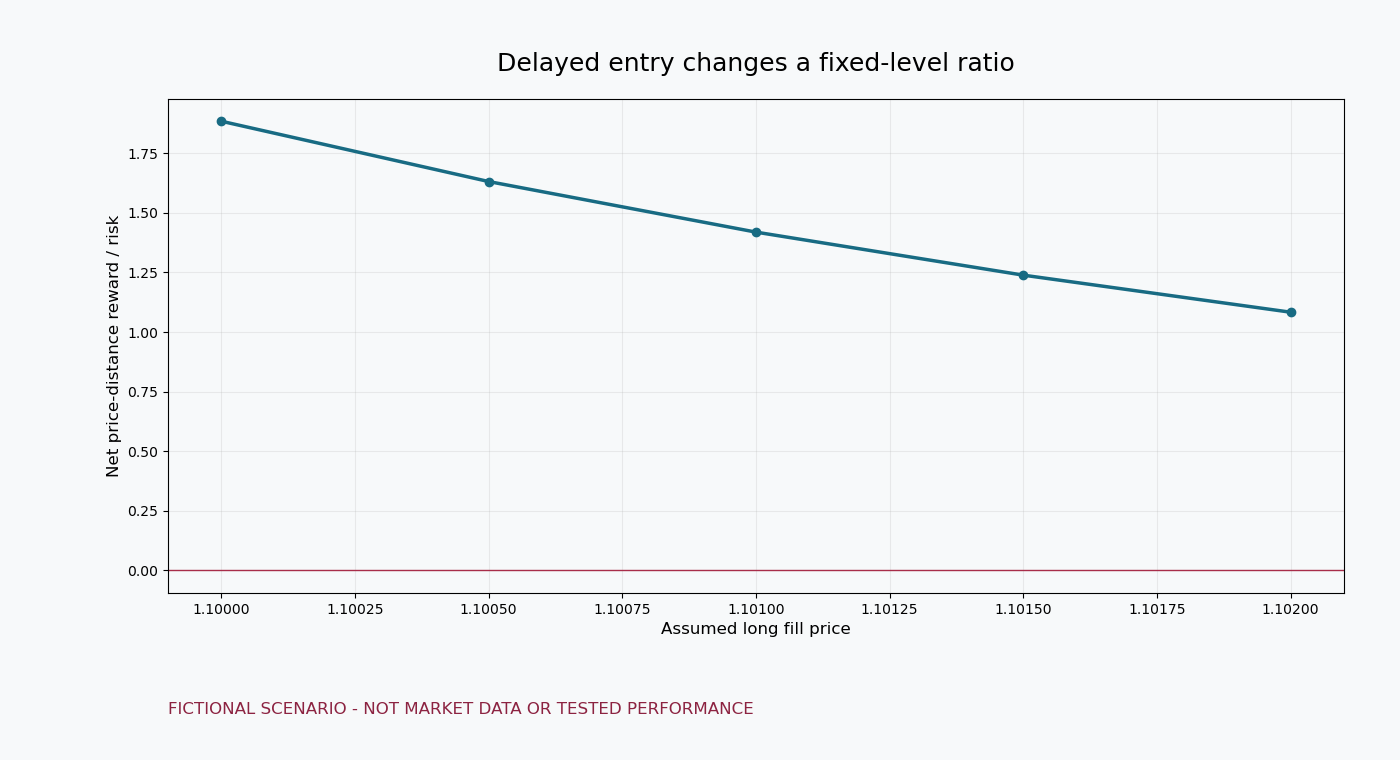
Inspect original entry instructions, expiry and cancellation rules, the complete trade population and a sample export. Compare the advertised reward-to-risk with a delayed-entry scenario. Then review exact subscription, broker, financing and renewal conditions. Avoid any offer whose promised outcome replaces an inspectable record.
Build a timestamped ledger from published instructions to your own broker record.
Account ratios, minimum lots and reconnects can make a copied strategy differ from its source.
Review operator identity, offer terms, broker permissions and recurring cost before committing.
A scoped assessment of Benzinga Pro for Forex Signal Provider Reviews. Public documentation and evidence limits, not a performance score.
A scoped assessment of Cryptohopper for Forex Signal Provider Reviews. Public documentation and evidence limits, not a performance score.
A scoped assessment of Learn2Trade for Forex Signal Provider Reviews. Public documentation and evidence limits, not a performance score.
A scoped assessment of MQL5 Signals for Forex Signal Provider Reviews. Public documentation and evidence limits, not a performance score.
A scoped assessment of Trade Ideas for Forex Signal Provider Reviews. Public documentation and evidence limits, not a performance score.
A scoped assessment of TradingView alerts for Forex Signal Provider Reviews. Public documentation and evidence limits, not a performance score.
A scoped assessment of Vector Ridge for Forex Signal Provider Reviews. Public documentation and evidence limits, not a performance score.
A scoped assessment of ZuluTrade for Forex Signal Provider Reviews. Public documentation and evidence limits, not a performance score.
Separate education, alerts, broker referrals and managed or automated arrangements before comparing evidence and commercial commitments.
Attach each review assertion to the exact forex product, original source and type of verification. A comparison article should not borrow a seller claim as its own finding.

The expanded research library follows the operational boundaries around a currency instruction. It covers lots and contract size, bid and ask records, tick grids, conversion timing, financing, copying changes, expiry and open-position accounting. Four invented positions make the cash and quantity conventions inspectable, while three populated order-grid cases compare different declared pip and conversion assumptions. The new material belongs to no provider performance history. It complements the existing directory so readers can investigate the actual job, account conditions and records they need from the offers being compared.
Translate entered lots into a declared linear quantity before comparing instructions, fees or account outcomes.
Keep the reference quote, the side used for an action and the account execution apart when reviewing a currency signal.
State pip size, minimum price increment and volume basis explicitly instead of applying one pip value to every symbol.
Convert compatible cash components under explicit event rates before adding results from unlike quote currencies.
Separate price changes from entered financing and other account debits without assuming a universal rollover schedule.
Record source and subscriber identifiers, contract multipliers and accepted quantities before calling two copied paths equivalent.
Keep active, unfilled, expired, rejected and amended instructions distinct through a forex order lifecycle.
Reconcile remaining lots, realised events, conversion assumptions and costs without treating a partial win as a complete position outcome.
Compare an intended price-distance loss with an entered execution assumption while keeping volume, currency and fees visible.
Map shared currency legs and observation cutoffs without treating different symbols as independent risks or opposite labels as proven hedges.
Distinguish service access observations from open-position accounting when an evaluation window ends before its positions mature.
Compare the specific information and account responsibilities a workflow supplies instead of mixing scanners, alerts and copying outcomes.